10 RPGs From The '90s That Aged Like Fine Wine
The 1990s proved a pivotal decade for gaming, fueled by technological advancements and new businesses that would go on to leave a lasting impact on the industry. The '90s saw the release of both the original Sony PlayStation (1995) and the Nintendo 64 (1996) which brought iconic titles such as Super Mario 64, Resident Evil, and The Legend of Zelda: Ocarina of Time.
New opportunities in the '90s also helped pave the way for RPGs, and although countless technological advancements have been made in the past three decades, many of those games are still worth playing today. The games are just that good — and several of them also helped provide the framework for modern titles.
10
Chrono Trigger

Nearly a decade before Square Enix was formed, two of the gaming industry's biggest players — Squaresoft and Enix — joined forces in 1995 to create an RPG that remains highly regarded today. In Chrono Trigger, players control Crono and a band of adventurers who travel through time to stop a global catastrophee and save the world from the alien entity Lavos. The game combines some of the best elements of the genre: a captivating story, charming music, and fluid combat based on the Active Time Battle system used in early Final Fantasy titles.
Perhaps the most enduring quality of Chrono Trigger, even after 30 years, is its replayability. The game has more than a dozen endings to discover, including a special secret ending that pays tribute to the developers — endearingly called the "Dream Team" — who brought Chrono Trigger to life.
9
Castlevania: Symphony of the Night

Symphony of the Night may not have been the first Castlevania game — the first Castlevania title predates 1990 — but it was a turning point for the franchise. It transformed Castlevania from a stage-by-stage platformer into an action-RPG and laid the groundwork for future Metroidvania games. In Symphony of the Night, players assume the role of Alucard, the half-human son of Dracula, as he explores his father's massive, sprawling castle — and it is truly massive. There are 940 rooms and an equal number of inverted (mirrored) rooms, for a total of 1,880 across two mirrored maps.
With the game's 30th anniversary approaching in 2027, it's a good time to appreciate the immortal charm of Symphony of the Night's gothic pixel art and its haunting soundtrack by composer Michiru Yamane (which many consider to be one of the best soundtracks in the Castlevania series).
8
EarthBound

At a time when most games involved fighting dragons or rescuing trapped princesses, EarthBound chose a different route. A young boy named Ness and his friends are tasked with stopping an alien invasion from destroying the planet. To do that, they wield baseball bats instead of swords and eat pizza and burgers to restore health. Gameplay involves stopping at local libraries to collect maps and traveling between towns by bus. Anyone who grew up in the '90s will find just as much charm in the game's coming-of-age tale as in its 16-bit pixel art style, reminiscent of other early Super Nintendo games.
EarthBound is more highly regarded now than it was at the time of its release. In the July 1995 issue of GamePro magazine, Sir Scary Larry wrote, "The humor is too mature for little kids, and the gameplay is too immature for older gamers. This one is bound to fall to Earth sometime soon." Over the past three decades, those who now call EarthBound a cult classic have proven Larry wrong.
7
Final Fantasy Tactics

Final Fantasy Tactics launched in 1997 to both player and critical acclaim and received an IGN Editor's Choice Award, and with good reason. The story follows highborn cadet Ramza Beoulve during a conflict known as the Lion War and touches on themes like class warfare and political corruption. Tactics also introduces a flexible job system that enables players to switch classes, earn job points, and mix-and-match abilities. Players start as either a Squire (physical) or a Chemist (support/magic) and, as they earn points and progress through class trees, they can take on more powerful roles like a Knight or Black Mage.
The game was so well received that a PlayStation Portable version, titled The War of the Lions, was released in 2007. A modern remake, The Ivalice Chronicles, was released in 2025; it includes quality-of-life updates and the option to switch between "classic" and "enhanced" graphics.
6
Fire Emblem: Genealogy of the Holy War

Before Fire Emblem gained widespread recognition in the United States, there was Genealogy of the Holy War, released exclusively in Japan in 1996. The game never received an official English translation, which means the only way to play this cult classic is via emulation. Genealogy of the Holy War is split into two parts. In the first, players have the opportunity to pair characters through matchmaking. The second part of the game features an almost entirely new cast of characters, largely made up of children from the first set of characters — hence the word genealogy.
Modern Fire Emblem games, like the forthcoming Fortune's Weave, have moved away from matchmaking mechanics, but that hasn't stopped fans from asking for a remake of Genealogy of the Holy War for years.
5
Super Mario RPG

All of Mario's adventures prior to 1996 were strictly platformers with the occasional mini-game built in. In Super Mario RPG, Mario teams up with characters such as Bowser and Princess Peach, which was a departure from the franchise's normal mold. There's a reason for this: Nintendo teamed up with Squaresoft (now Square Enix), which was already gaining steam for its popular Final Fantasy series, to develop the game. The game also features a familiar turn-based combat system in which players can attack or use items like mushrooms to restore health.
A polished version of Super Mario RPG was released for the Nintendo Switch in 2023. Although it features more modern-looking 3D graphics, the core gameplay remains the same as the original.
4
Fallout 2

Though the graphics in 1998's Fallout 2 are a far cry from modern titles like Fallout 76, it's well worth a playthrough. What Fallout 2 lacks in graphical prowess, it makes up for in its rich story, which expands on the post-apocalyptic wasteland introduced in 1997's original Fallout. In Fallout 2, set 80 years after the first game, the world is nearly double the size of the original map, giving the player more freedom to explore and more characters to meet. Players' decisions also matter quite a bit in Fallout 2; different choices can alter the fates of towns and inhabitants.
The Fallout series has cemented its place in pop culture, with several main games and spin-offs as well as a successful TV series adaptation on Prime Video, so revisiting Fallout 2 is a nice way to see where it all began.
3
Parasite Eve
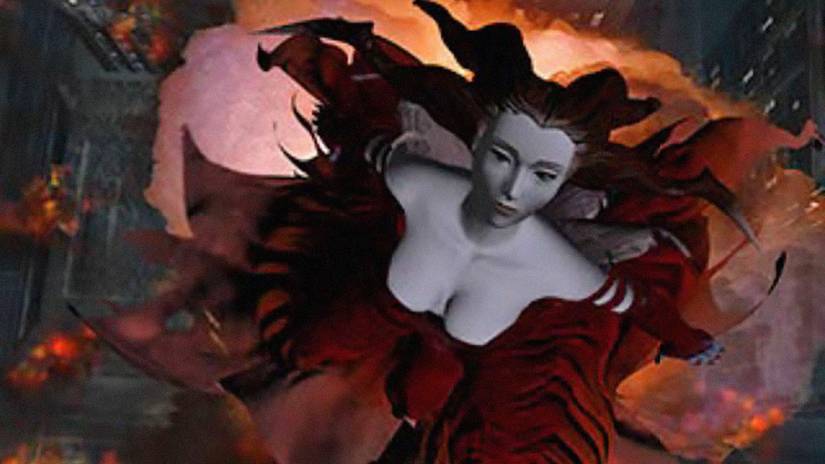
Mix the survival-horror elements of Resident Evil with the cinematic flair of Final Fantasy, and you'll get Parasite Eve, a horror RPG set in New York City in the late '90s. The game opens with NYPD officer Aya Brea, who goes looking for a little Christmas Eve magic by attending the opera when all of a sudden, audience members begin to spontaneously combust around her. Everyone is affected except for Aya and mysterious songstress Melissa Pearce, who is actually possessed by the mitochondrial parasite Eve. In true survival-horror fashion, Aya must chase down Melissa (Eve) and put a stop to the biological reign of terror.
Parasite Eve is weird and tense. At times, it leans into body-horror elements that some might find gross, but it's compelling from start to finish. And since there is no modern remake of Parasite Eve, the best way to experience the story is to play the original.
2
Suikoden I & II

Konami shot for the stars in the 1990s, aiming to craft a JRPG to rival Final Fantasy. While it's been more than two decades since the last mainline title, early Suikoden games are still highly regarded today. Both Suikoden I and Suikoden II are centered around the same idea: building an army, growing a base, and fighting a war. Suikoden I's plot moves faster and in a fight against a corrupt Scarlet Moon Empire. Suikoden II's plot builds more slowly and centers on two childhood best friends torn apart by a war close to home. Each game features a roster of 108 recruitable characters who support your active party and help defend your base.
Both games are worth playing, especially since a Suikoden anime is right around the corner. An HD remaster/collection of Suikoden I & II is available for $49.99.
1
Pokémon Gold & Silver

Red and Blue may have introduced an entire generation to Pokémon in 1998, but it was a year later with the launch of Gold and Silver that it became clear just how big the franchise would become. Pokémon Gold and Silver were the first games in which players saw the world in color after the black-and-white releases of Red and Blue. It was also massive, introducing a whole new region (Johto) to explore, 100 new Pokémon to capture, new puzzles to solve, and the bonus of being able to revisit the Kanto region in color after beating the main storyline.
More than 25 years after its release, many fans still regard Gold and Silver as representative of the "golden days" of Pokémon games.
Pokémon Gold and Silver were released in Japan in November 1999, but didn't reach the U.S. until 2000.