No bailouts for Jaguar Land Rover amid reports of thousands of job cuts, says minister
The government has signalled that it will not invest taxpayers’ money to limit job losses at Jaguar Land Rover (JLR), after it emerged that the UK’s biggest carmaker is planning up to 4,000 redundancies.
Before crunch talks on Tuesday between JLR, union leaders and government officials, the business secretary, Jonathan Reynolds, said it was not his job to “intervene and run businesses”.
JLR, owned by the Indian conglomerate Tata Motors, told staff on Friday to expect a voluntary redundancy programme, as it tries to shore itself up against tough conditions with £1.7bn in cuts over two years.
The Coventry-based company is expected to provide further details on job cuts as soon as Monday, which could include an admission that compulsory job losses are possible.
The expected cuts, which represent almost 12% of JLR’s 34,000-strong UK workforce, threaten to provide an early reality check on Andy Burnham’s pledge to “reindustrialise” Britain.
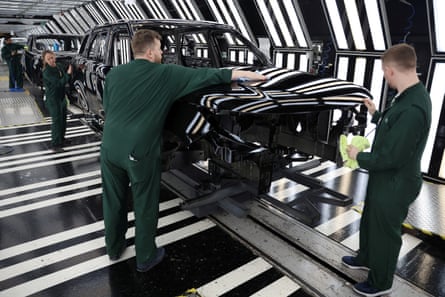
Sources said they expect the redundancies, first reported in the Sunday Times, to be weighted towards more senior roles in management and research and development rather than shop floor production workers.
JLR is understood to be responding to pressure from Tata to offset a slump in sales, exacerbated by the fallout from last year’s cyber-attack and the impact of Donald Trump’s tariff wars.
Speaking on the BBC’s Laura Kuenssberg show on Sunday, Reynolds signalled that the government was unwilling to put money into the business to limit job losses.
Asked if there could be financial support to protect the jobs, he said: “Not if it’s to bail people out.
“If this is about making sure over time that workforce is right to make the business as competitive as possible, that’s the conversation we need to have,” Reynolds said, referring to the wider “challenging” environment for the auto sector.
“We need to adapt to evolving global market conditions,” a spokesperson for JLR, which has its largest plant in Solihull in the West Midlands, said.
Reynolds is expected to come under pressure to help staunch the number of job cuts from the Unite general secretary, Sharon Graham, during crunch talks with the JLR chief executive, PB Balaji, scheduled for Tuesday. Union officials will push for JLR to swerve compulsory job losses in favour of retraining or voluntary redundancy where possible.
While Reynolds indicated that no bailout would be available, he hinted at other options to support carmakers.
He refused to rule out watering down government targets for UK automakers to reach 80% zero-emission car sales by 2030, which would lead to a ban on the sale of new petrol and diesel cars by 2035, pointing to an open consultation on the issue.
Carmakers and unions have lobbied hard for a slower transition, saying the targets outpace actual customer demand.
Reynolds also said that the government was sometimes prepared to invest “alongside” industry.
In 2024, the new Labour government under Keir Starmer agreed to invest £500m in another Tata business, the Port Talbot steelworks, to build greener electric arc furnaces. However, the investment did not prevent 2,500 job losses at the south Wales site.
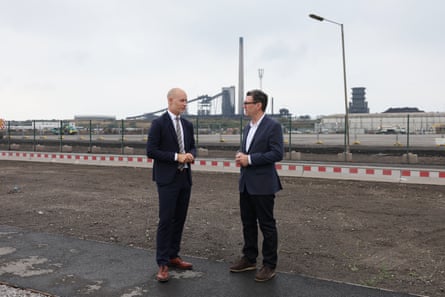
The prospect of a jobs purge at JLR poses a challenge for Burnham, who has placed plans to “reindustrialise” Britain at the heart of his offer to voters since taking office less than two months ago.
Last year, after JLR suffered the crippling cyber-attack, the government agreed to provide the company with a guaranteed loan facility of £1.5bn to help battle the impact on its supply chains and production. None of the loan has been drawn down.
As well as the cyber-attack, which halted production for several weeks and dented the UK economy, JLR has suffered the fallout from tariffs imposed by Trump, affecting the key American market for models such as the Range Rover and Defender.
Trump initially slapped tariffs of 27.5% on British cars before reducing the figure to 10% as part of a US-UK trade deal unveiled by Starmer to great fanfare at a press conference held at JLR’s Solihull plant in May last year.
Competition from Chinese models such as the Jaecoo 7 – ranked third among Britain’s top-selling cars – has also eaten into sales at JLR, which makes more than 400,000 vehicles a year.
JLR is not alone in being affected by these external factors. The German carmaker Volkswagen said last week it plans to cut a further 50,000 jobs as part of its turnaround plan as it faces US tariffs and Chinese competition.
The Guardian has approached the department for business and trade for comment.