Sonos Beam Ultra review: A huge Atmos upgrade for $699 - Engadget
It's basically just a mini Sonos Arc.
Devindra Hardawar for Engadget
RATING : 9 / 10
- Excellent sound quality for movies and music
- True Dolby Atmos upward-firing speakers
- Less obtrusive than the Arc Ultra
- Slides right into a Sonos system
- Expensive
- Dolby Atmos works best with flat ceilings
The Sonos Beam Ultra is a Beam speaker in name only. It may look like the company's previous mid-range speakers, but it sounds more like the high-end Arc, and it has a much higher $699 price to boot. The Beam Ultra justifies that increase with the addition of two upward-firing Dolby Atmos speakers, which can bounce overhead surround sound off of your ceiling, as well as provide more hardware for richer sound and deeper bass. It's a soundbar that even a home theater enthusiast could enjoy, whereas the second-gen Beam (now $499) felt merely like a good effort with its simulated Atmos sound.
The price is the hardest thing to stomach about the Beam Ultra. It's close to the original $799 cost of the Arc, which was replaced by the Arc Ultra two years ago. That's an Ultra speaker that launched at $999 and now sells for $1,099. Even before the AI-driven RAMaggedon and storage crunch, Sonos was already feeling the burn of market pricing pressure. Not that the company was ever truly price conscious — its connected speakers have always been significantly more expensive than the competition. A $699 Beam Ultra isn't for everyone, but for the Sonos faithful, or anyone who wants premium sound without crossing into four-figure territory, it's one of the best soundbars I've heard.
What's new in the Sonos Beam Ultra?
Devindra Hardawar for Engadget
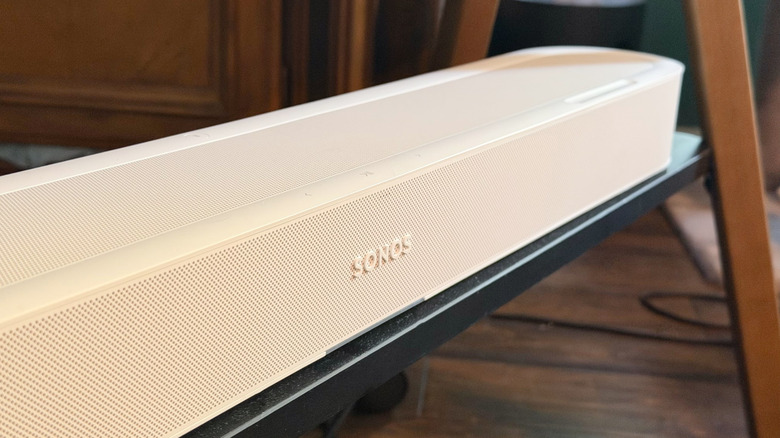
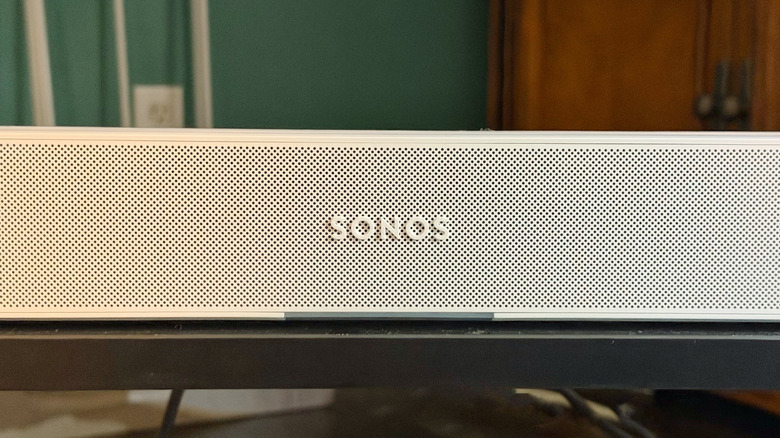
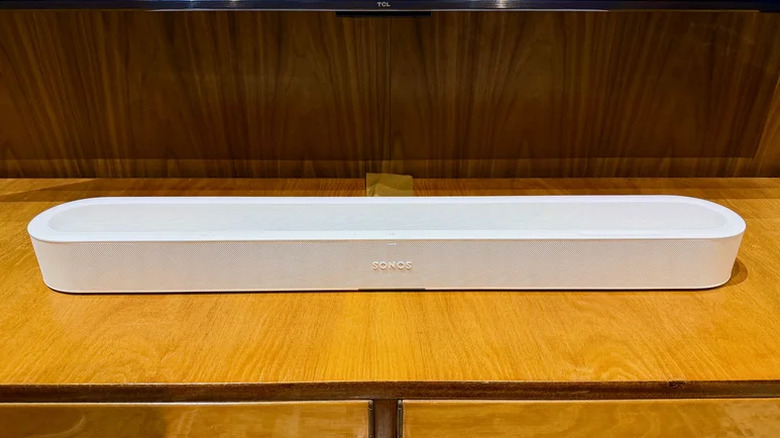
The first thing you'll notice about the Beam Ultra is that it looks like a more serious speaker than previous Beams, simply because it's a bit wider. Keep that in mind if an old Beam already takes up most of your TV stand. Otherwise, it has the same perforated metal design and it's still just 2.5 inches tall. It also weighs 6.35 pounds, just like the earlier models, despite its larger stature.
That more expansive case makes room for the Beam Ultra to be a much more capable speaker — especially since it now supports genuine Dolby Atmos, instead of just virtualizing immersive audio. It features five tweeters to emphasize mid-range dynamics (including two upward-firing tweeters for Atmos), four woofers for low-end power and nine amplifiers. In comparison, the second-gen Beam had a single center tweeter, four mid-woofers that handled both mid-range and low-end sound and three passive radiators to further emphasize bass performance.
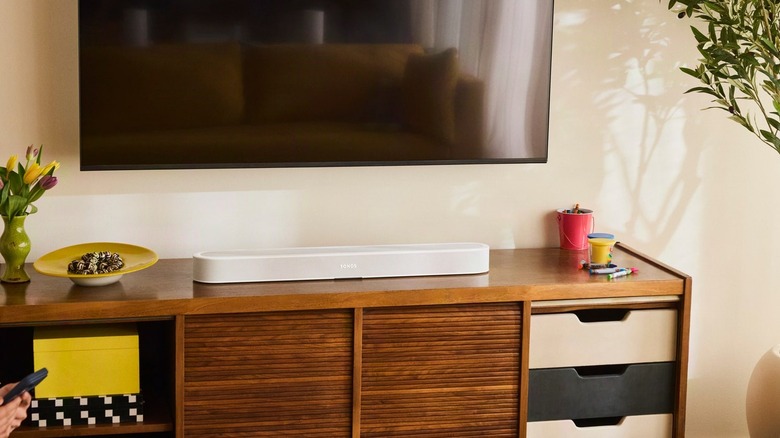
Given its size, the Beam Ultra is best suited for TV's 55-inches and up. I used it alongside a 65" TCL set, and it nearly covered the entire width of the TV. The Beam can also be mounted, like most soundbars, but that may interfere with the upward-firing Atmos speakers depending on how you set it up. Atmos soundbars and speakers bounce sound off of your ceiling to work, a technique that requires a clear view of a flat ceiling. If you're placing the Beam Ultra in an enclosed space, you'll have to flip on the simulated Dolby Atmos mode, which works like the previous Beam.
Also like the last Beam, the Ultra includes a far-field microphone for virtual assistants and Sonos Control. You can flip it on and off with a physical switch in the rear of the device, in case you want a bit of extra privacy. Sonos still supports Amazon Alexa and Google Assistant, and while we'll never see direct Siri AI integration (which requires Apple's own chips), you can at least create Siri-powered automations with the new Sonos 27 software.
Sonos didn't go too wild with onboard controls. The Beam Ultra has capacitive buttons up top for play/pause, as well as jumping between the last and next tracks in your playlists. There's also a long groove for turning the volume up and down. Personally, I always turn those buttons off to avoid child or pet interference, but I can see how they'd be useful.
Sonos hasn't changed anything about the Beam Ultra's connectivity: It still connects to your TV's HDMI eARC port. That both delivers premium audio, and allows the soundbar to directly control your TV. If you've got a very old set, you can use the bundled HDMI to optical audio cable to get basic surround sound connectivity, but you'll lose Dolby Atmos support. Honestly, if your TV is old enough not to have eARC, you'd be far better off upgrading that before getting a premium soundbar.
In-use: It's more like a mini Sonos Arc
Nathan Ingraham for Engadget
I've been using the original Sonos Beam with my bedroom TV since it debuted in 2018, so I've grown used to its somewhat cramped sound stage. It's a great speaker for hearing crisp dialog in movies and TV, but it's severely compromised when it comes to room-filling sound. When I reviewed the second-gen Beam, I was pleasantly surprised by its software-based Atmos capabilities. Not surprisingly, given its significantly more capable hardware, the Beam Ultra blows away its older siblings. At times, it almost sounds as good as the original Sonos Arc (which has far more speaker tech crammed in).
The Beam Ultra roared to life with all of my favorite Atmos action set-pieces. The first major chase in Mad Max: Fury Road filled by bedroom with distinct rumbles from multiple cars, as well as tons of gunfire and explosions. Despite the chaos, nothing sound muddled, and I could still hear the dialog in key moments. When motorcycles started flying overhead, it almost felt like I was back in a true Dolby Atmos theater. Flipping on the simulated Atmos mode made things sound a bit less convincing, but it was still more expansive than the old Beams.
During the Mission: Impossible – Ghost Protocol seemingly endless car-turned-motorcycle chase, I was able to close my eyes and map out exactly where every bad guy biker was on the screen. When Tom Cruise (Ethan Hunt) hops on a motorcycle to speed down Moroccan streets and highways, it practically felt like I was riding alongside him as I raised the Beam Ultra's volume.
When my kids interrupted my audio testing time and forced me to play Sing 2, the Beam Ultra practically turned my bedroom into a concert hall. The opening rendition of Prince's "Let's Go Crazy" sounds revelatory compared to the older Beams — the voices are clearer and easier to hear, every instrument feels more defined and the low-end has a wonderful impact.
Not surprisingly, the Beam Ultra was also fantastic for pure music playback. A quick listen of Bjork's Post turned into a complete revisit of that album. I've heard it sound better on premium headphones and my full home theater system, but the Beam Ultra still impressed me given its relatively compact frame. Playing Dolby Atmos audio via Apple Music also revealed a wonderful sense of presence from Bowie's "Modern Love," Janelle Monae's "Lipstick Love" and Al Green's "Let's Stay Together," all of which sounded like they were being performed live in the room.
The Beam Ultra's night mode also helped quiet things down when I couldn't blast action movies, and its four levels of speech enhancement also made it easier to hear dialog without cranking the volume. Sonos recommends against using that dialogue feature while playing music or games, which makes sense, but it would be nice if the Beam Ultra could automatically detect the content you're playing so you don't have to manage it manually.
I didn't get to test the Beam Ultra out with additional Sonos speakers as rear channels, but I can only imagine they'd make the already-enveloping soundscape even better. Even if you're not planning to add surround sound, though, the Beam Ultra is a useful addition if you've already got other Sonos speakers around your house. Sonos was the pioneer in networked home speakers, and it's still the best at it. When my kids are feeling unruly, I often flip on the Sonos Arc and Play:5's and fill the house with music. The Beam Ultra was a wonderful way to bring the house party upstairs.
Should you buy the Beam Ultra?
Sonos
If you're coming from the first-generation Beam, the Ultra is a huge step up on every level. And there's still plenty to love with this new model if you have the second-gen Beam, especially if you have flat ceilings for upward-firing Atmos. At $699, the Beam Ultra is certainly a large investment, but it's one that will likely reward you for years.
If you've got a large room and/or an enormous TV, it's probably worth spending the extra cash to jump straight up to the Arc Ultra. It has significantly more speaker hardware to fill big spaces. The Beam Ultra is best suited to small and mid-sized rooms. For more bang for your buck, consider the $448 Vizio 7.1.4 Elevate, which includes a large Atmos soundbar, four satellite speakers and a wireless subwoofer.
Wrap-up
The Beam Ultra is my favorite kind of speaker: It can be cranked up for action movies but also be dynamic enough to handle complex music playback. I lost a few hours of time just listening to John Williams scores and classical music encoded in spatial audio. Perhaps I just miss attending live concerts, but the Beam Ultra at least gets me close.