The Most Dominant Win Streaks in BWF World Tour History (2018–2024)
In a tour where a single off-day can end any winning run, sustained win streaks are among the rarest achievements in professional badminton. Across 14,918 BWF World Tour matches in our dataset covering 2018 to 2021, only a handful of players ever built a consecutive win run of 20 or more matches. Viktor Axelsen holds the record in our men’s singles data with 24 straight victories — two more than Kento Momota’s 22-match streak. In women’s singles, Tzu-Ying Tai built a 21-match run that stands as the longest in that discipline within the same period. Here is what those numbers mean, why they are hard to achieve, and which other players came close.
- Viktor Axelsen holds the longest men’s singles win streak in our BWF 2018–2021 dataset at 24 consecutive matches.
- Kento Momota is second in MS with 22, despite having a higher overall win rate — showing that streaks and win rate measure different things.
- Tzu-Ying Tai leads women’s singles with 21 consecutive wins in the same period.
- Sustaining a streak across BWF events requires winning across multiple tournament tiers against fully fresh fields at each event.
- Jonatan Christie is the only Indonesian player in the top-3 MS streak list with 12 consecutive wins.
Why Sustained Win Streaks Are Harder in BWF Than in Other Sports
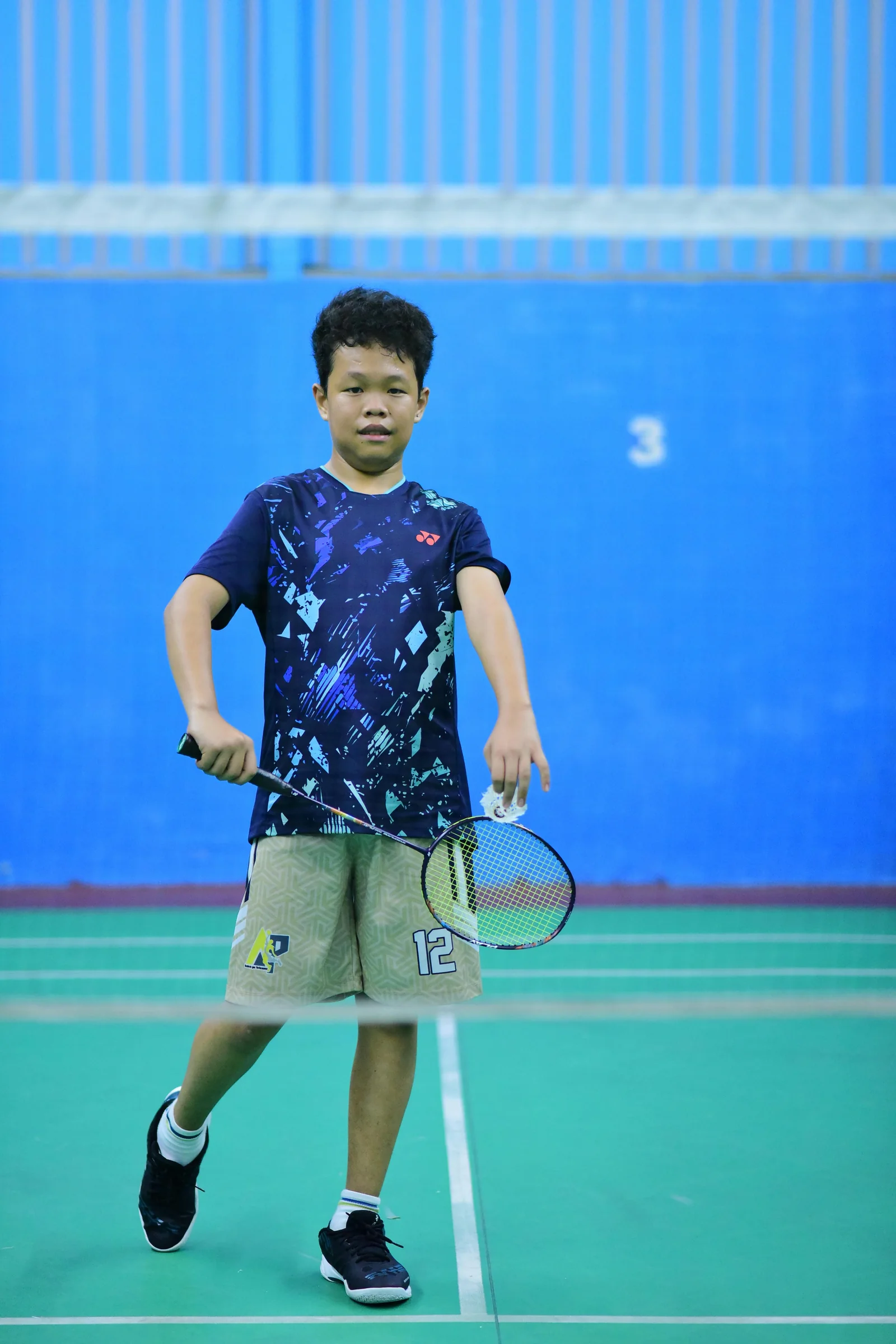
In sports with scheduled fixtures against fixed opponents — football leagues, basketball seasons — a team can plan schedules and manage fatigue across consecutive games. BWF World Tour works differently. Each tournament is a fresh elimination bracket, meaning a player must win 5 to 7 consecutive matches against a new field of opponents who arrive rested and scouted. A streak that crosses multiple tournaments carries an additional hazard: the bracket composition is random at each event, so there is no equivalent of “catching a weaker schedule.”
The Cross-Tournament Challenge: Fresh Fields Every Time
Across our database of 14,918 BWF World Tour matches from 2018 to 2021, the average top-10 men’s singles player competed in between 10 and 15 tournaments per year. Each Super 1000 event draws the full top-32 field — meaning that to sustain a win streak spanning two Super 1000 events, a player must beat some of the world’s best in consecutive tournaments without a break. Viktor Axelsen’s 24-match streak, the longest in our MS dataset, almost certainly crossed multiple tournament finals, including events at Super 500 and Super 1000 level.
The cross-tournament structure also means streaks can end for reasons unrelated to form: an early draw against a hot opponent, a travel-disrupted preparation week, or a first-round opponent who has nothing to lose. This randomness is why overall win rate is a more stable measure of quality than streak length — a player can hold a 90%+ win rate while never sustaining a 15+ match streak if they encounter difficult draws early in otherwise winning campaigns.
What a 20-Plus Match Streak Actually Represents
To put the 24-match threshold in context: if a player wins 80% of all their matches, the probability of winning 24 in a row by chance alone is approximately 0.8^24 = 0.47% — less than one in 200. At a 90% win rate, the probability rises to 0.9^24 = 7.9%. This means Axelsen’s 24-match streak and Momota’s 22-match streak, occurring within the BWF’s most competitive period, were not statistical flukes — they reflect genuine dominance across multiple competitive events. The streaks represent players operating at a level where even the quarter or semifinal opponents were not capable of ending the run.
In women’s singles, Tzu-Ying Tai’s 21-match streak carries similar weight. Tai’s overall win rate in our dataset is among the highest for WS players with at least 50 matches, and her streak represents a period where the field consistently could not identify or exploit a weakness across multiple consecutive events.
How Streak Length Compares to Overall Win Rate
The relationship between streak length and overall win rate is not one-to-one. Axelsen’s 24-match record comes despite his overall win rate of 77.3% being lower than Momota’s 86.6%. Momota’s 22-match streak is achieved with a higher baseline win rate, meaning Momota’s consistency is slightly more “scheduled” — rare losses occur more evenly distributed. Axelsen’s pattern may involve longer periods of dominance followed by occasional concentrated losses, which is a different but equally valid form of excellence. Understanding this distinction is part of reading a player’s full performance breakdown rather than relying on a single metric.
The Men’s Singles Streak Leaders in Our Dataset
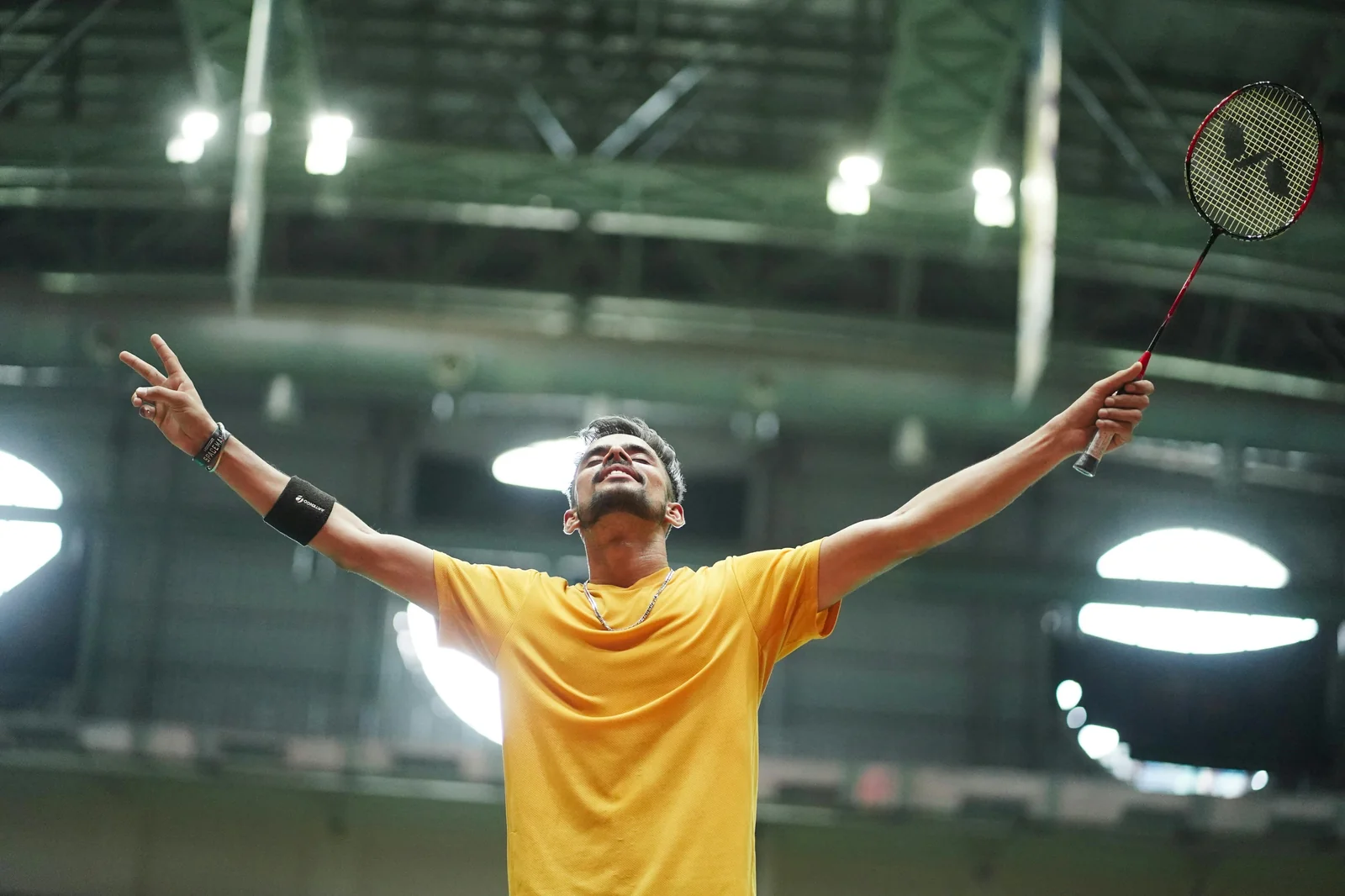
Our database captures five disciplines across 14,918 matches from 2018 to early 2021. Among men’s singles players with at least 20 matches in the database, the streak leaders reveal a clear hierarchy — and some surprises.
Viktor Axelsen (24) and Kento Momota (22): The Benchmark Tier
Axelsen leads the men’s singles streak table with 24 consecutive wins from a total of 119 MS matches and 8 titles in our dataset. The streak almost certainly spans at least three tournaments, each requiring wins across five or more rounds. His 92 total wins place him third in absolute wins in MS, with Momota (97 wins) and Tien Chen Chou (96 wins) fractionally ahead — but Axelsen’s streak record is the highest of the three.
Momota’s 22-match streak is produced from a dataset of 112 matches and 14 titles — by far the most titles of any player in our MS data. Momota’s titles-to-matches ratio (14 from 112) means he won a title roughly once every 8 matches entered. His streak of 22 represents a period within that career where no opponent at any round — from R32 through to the Final — could halt the run. Given that Momota’s finals record spans 18 Final appearances (14 wins), his streak likely includes at least two or three Finals victories in sequence.
The 10-to-12 Match Tier: Christie, Sen, and Others
Below the top two, a distinct second tier holds streaks between 10 and 12 matches. Jonatan Christie (Indonesia) recorded 12 consecutive wins — the longest streak outside the top two in our MS dataset, achieved from 102 total matches and 2 titles. Christie’s streak demonstrates that a player can sustain a dominant run across multiple events even without Momota or Axelsen’s overall win rate (Christie’s is 63.7%).
Lakshya Sen (India), Wan Ho Son (Korea), Shesar Hiren Rhustavito (Indonesia), and Guangzu Lu (China) each recorded 10 consecutive wins. Notably, Sen achieved his streak from only 45 total matches in our database — a relatively small sample that makes the 10-match run a proportionally significant fraction of his recorded career. Anders Antonsen (Denmark) sits just outside with 9 consecutive wins from 93 matches.
Women’s Singles: Tzu-Ying Tai’s 21-Match Run
In women’s singles, Tzu-Ying Tai (Chinese Taipei) leads the streak table with 21 consecutive wins from 124 total WS matches and 11 titles in our dataset. Her 21-match run is the longest cross-discipline streak in our data outside Axelsen’s 24. Yu Fei Chen (China) is second in WS with 20 consecutive wins from a much smaller 50-match sample — making Chen’s streak proportionally remarkable. Xuerui Li (China) holds third with 19 consecutive wins from 54 matches.
The WS dataset shows more compressed streaks in the 10-to-14 range for players like Carolina Marin (Spain, 12), Se Young An (Korea, 12), and Sayaka Takahashi (Japan, 14) — all elite players with strong overall win rates who nonetheless did not sustain the extended cross-tournament run that Tai and Chen achieved.
What Streak Data Reveals That Win Rate Cannot

Streak analysis addresses a different question than win rate: not “how often does this player win?” but “how long can they avoid a loss?” The two metrics can diverge meaningfully, as the Axelsen vs. Momota example shows. Three practical applications make streak data useful beyond its surface value.
Identifying Peak-Form Periods vs. Career-Wide Consistency
A player’s longest streak represents their peak-form period — the span of weeks or months when every competitive variable aligned in their favour. Comparing the streak to the overall career record tells you whether that peak was elevated above the career baseline (a player who is streakier than consistent) or representative of their general level (a player who is consistently dominant). Momota’s career record is close to the latter: his 86.6% overall win rate means that even outside his 22-match streak, he was winning at a very high rate. Axelsen’s 77.3% overall rate with a 24-match peak suggests his career has more variance between peak and baseline phases.
Streak Length Across Tournament Tiers
Not all streaks are equal across tournament levels. Ten consecutive wins at Super 100 events — where the field depth below R16 is significantly weaker — is a different achievement from 10 consecutive wins at a mix of Super 500 and Super 1000 events. When evaluating streak data, always consider at which BWF tournament tier the streak was primarily built. Axelsen’s streak, spanning the 2018–2019 period when he was competing across all tiers, carries weight across multiple competitive contexts.
What Breaks a Streak and What That Tells You
The match that ends a win streak is analytically valuable: it identifies the opponent type, round, and conditions that finally broke through a player’s dominance. For players with long streaks eventually ending in a semifinal or final loss, the ending match often points to the specific opponent profile that represents a genuine weakness — the information that future analysts and opponents will use most. A streak ended by a loss in R32 suggests a different vulnerability from a streak ended in a Final.
Frequently Asked Questions
Who has the longest win streak in BWF World Tour history?
In our dataset of 14,918 BWF World Tour matches from 2018 to early 2021, Viktor Axelsen holds the longest men’s singles consecutive win streak at 24 matches. Kento Momota is second with 22. In women’s singles, Tzu-Ying Tai leads with 21 consecutive wins in the same period.
How long is a typical win streak for a top-10 BWF player?
Based on our dataset, the majority of top-10 men’s singles players record their longest streak in the 7-to-12 match range. Only two players — Axelsen (24) and Momota (22) — broke the 20-match threshold in our period. For women’s singles, Tai and Yu Fei Chen both exceeded 20, with the second tier clustering around 12-14 matches.
Can a player maintain a win streak across different BWF tournament tiers?
Yes, but it becomes harder at higher tiers. A player with a streak built primarily at Super 100 and Super 300 events faces weaker fields than one sustaining a streak across Super 750 and Super 1000 events. To reach 20+ consecutive wins, a player almost certainly had to beat top-15 opponents multiple times during the run, since the draw at Super 1000 events places world-class players even in early rounds.